White Rose

Growing up, we had a Mother’s Day tradition in my part of Virginia. At church that Sunday, men and boys whose mothers were still living would wear a red rose on their lapel and any one whose mom was deceased honored her by wearing a white rose. That may explain why I have never liked white roses.

If I were to wear a white rose on Mother’s Day this Sunday, it would be the 10th time since my mother slipped from our arms into her Saviour’s everlasting embrace. While I won’t wear a white rose, I will honor her here.
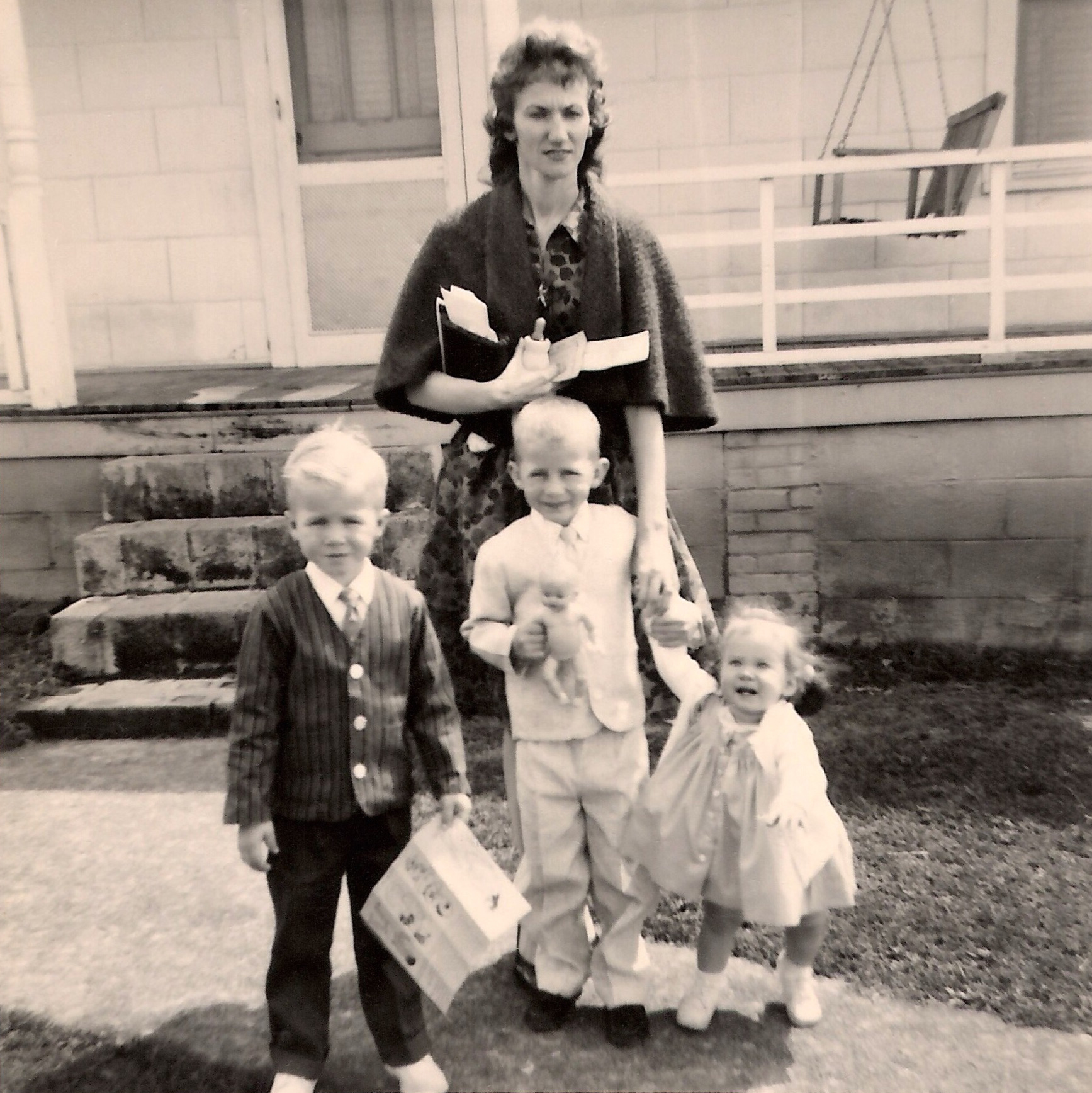
Out of all the yellowing albums and shoeboxes of pictures, one of the photographs that best captures my mother’s life is from a Sunday long ago. As usual, her hands were full! In one hand she is holding her Bible and a baby bottle. The Bible is cluttered with papers—and probably some sheet music because she was both a Sunday School teacher and church piano player. At our little church, she was a “Swiss Army knife” of servanthood! In the other hand, she (along with my older brother) holds the hand of my little sister, who was just learning to walk. I am the only one in the picture who isn’t being very useful!

Two more daughters were born in later years, and then grandchildren followed. Her hands were always busy, loving her husband, loving her children, comforting, correcting, cooking, cutting hair, reading, washing, and playing the old hymns—but with the style of Jerry Lee Lewis! On Saturday night, she used to practice for church the next day. She loved songs about heaven. She sang and banged them out in rapid rhythm, like she planned to be there. By God’s grace, she made it. But to get there, He led her through years of suffering—as He stilled her busy hands. When she was dying of cancer, I wrote this from her bedside:


Early morning, January 12

The last bits of snow catch the light of a near full moon as it sets over cold, vacant streets.  I had expected to write this article from Pakistan, where I was to interview survivors of two church grenade bombings, but that trip was cancelled in order to be here—Room 9331 of the cancer ward of Duke University Medical Center. 

My mother, so thin now and so fragile, lies in a bed next to me.  A tangle of tubes runs into her much-bruised arm.  The machines she is attached to seem detached from her pain as they hum quietly to themselves.  I have sat through the night with her, catching a couple of naps during her shallow sleeping and shallow waking.  She is resting now, and I am writing.

We had a good evening together, holding hands and reading much Scripture.  My earliest memory of her was of her reading the Bible to my brother and me; so tonight it was my turn.  With nearly 40 years of teaching Sunday School, she taught many children about the Lord besides her own.  Hers was always the quiet service in the back rooms—which is where much of the Lord’s work is done.  An old preacher once told me, “Between the great things we cannot do and the little things we will not do, lies the danger of doing nothing.”  My mother, armed with flannelgraph, animal crackers, and Calvary Love, was never in such danger. 

We recalled tonight how we used to sing together.  I was too young to read; so she taught me the words and played the piano.  That old, beaten-up piano had a keyboard that looked like an ugly grin with ivories yellowed, cracked, or missing—but we sang the Lord’s songs around it nonetheless.  At church she played, too.  I remember how pretty she was at the piano.  She played, and I sang solos for special music of the songs she had helped me memorize.

She reminded me tonight that one of those songs that she taught me was about Stephen in Acts.  I had forgotten that.  Sitting here in this long hour before dawn, the words of the chorus all come back:

I see Jesus standing at the Father’s right hand.

I see Jesus yonder in the Promised Land.

Work is over, now I am coming to Thee.

I see Jesus standing, waiting for me.

She cannot sing now behind the oxygen mask with her throat parched by radiation, but she did tell me in the middle of the night that there are times lately when she has heard the most beautiful music.

The east brightens.  Mama is stirring.  She asks to be propped up so she can see the morning sky.


On Mama’s last birthday, I gave her a dozen red roses. She died the next day, and so I slipped one of them into her hand. At her funeral, my brother, sisters and I scattered the last red petals on her casket—fragrant bits of life cast in the grave—a promise of things to come. I know through the power of the Risen Christ, Mama has never been more alive—her hands never more busy, serving and praising in the place she so often sang about and now sees—a place where all tears have been wiped away by nailed-scarred hands and where no one ever wears the white rose of sorrow.

Tim Keesee

Bold Lines: Coffee & Ink


Coffee falls into the stomach....

Ideas begin to move,

Things remembered

arrive at full gallop...

The shafts of wit

Start up like sharpshooters,

Similes arise,

The paper is covered with ink...

-Honore de Balzac


Bold Lines: Cell 44


When I was arrested for religious activity and denied the work for which I consecrated my life, I lost heart. I was put in a cell with approximately one hundred other people after my first interrogation. Suddenly I understood why I was in prison. Before going to bed I prayed, "Lord, it used to be so difficult for me to gather people together in order to preach your Gospel. But now I have no need to gather them. They are already here. Make me a blessing to them..."

The Lord heard my prayer. Prisoners were coming and going through this cell. In a short time forty people believed in Christ. I taught them to sing hymns and pray. Guards often banged on the door and ordered us to be silent. The authorities finally found out what was happening and transferred me to the cell for hardened criminals. Precisely at that time, I received from my family a parcel containing bread, sugar, and clothing. When I entered the new cell, the criminals' eyes searched me. I took a few steps, set my bag on the floor, and looked around at them.

"Men, today I received a parcel. Maybe there are some needy among you. Divide it..."

A tall, sullen fellow, probably their leader, approached me, silently took my parcel, and divided it equally among all of us. "Here, this is your part," he said, giving me a portion and returning my empty bag.

As a newcomer, I had to take the worst place in the cell, but the leader said, "For good people we have a good place. Now tell us why they transferred you to this cell."

"Well, in Cell 44 I taught people how to pray to God. The authorities did not like it, so they threw me in here."

The leader smiled for the first time. "Very good! Now you will teach us."

 
Georgi Vins (1928-1998) spent 8 years in Soviet gulags for the sake of the Gospel.

Georgi Vins (1928-1998) spent 8 years in Soviet gulags for the sake of the Gospel.


Twelve Miles To Ride

The following is an eyewitness account of George Whitefield's visit to Middletown, Connecticut, on October 23, 1740. It is taken from "Whitefield's Journals" (The Banner of Truth Trust, 1960. p. 561-562). The writer, Nathan Cole, was a farmer and carpenter in Connecticut during the First Great Awakening.


Now it pleased God to send Mr. Whitefield into this land, and my hearing of his preaching at Philadelphia, like one of the old apostles, and many thousands flocking to hear him preach the Gospel, and great numbers were converted to Christ, I felt the Spirit of God drawing me by conviction; I longed to see and hear him and wished he would come this way. I heard he was come to New York and the Jerseys and great multitudes flocking after him under great concern for their souls which brought on my concern more and more, hoping soon to see him; but next I heard he was at Long Island, then at Boston, and next at Northampton. Then on a sudden, in the morning about 8 or 9 of the clock there came a messenger and said Mr. Whitefield preached at Hartford and Wethersfield yesterday and is to preach at Middletown this morning at ten of the clock. I was in my field at work. I dropped my tool that I had in my hand and ran home to my wife, telling her to make ready quickly to go and hear Mr. Whitefield preach at Middletown, then ran to my pasture for my horse with all my might, fearing that I should be too late. Having my horse, I with my wife soon mounted the horse and went forward as fast as I thought the horse could bear; and when my horse got much out of breath, I would get down and put my wife on the saddle and bid her ride as fast as she could and not stop or slack for me except I bade her, and so I would run until I was much out of breath and then mount my horse again, and so I did several times to favour my horse. We improved every moment to get along as if we were fleeing for our lives, all the while fearing we should be too late to hear the sermon, for we had twelve miles to ride double in little more than an hour and we went round by the upper housen parish. And when we came within about half a mile or a mile of the road that comes down from Hartford, Wethersfield, and Stepney to Middletown, on high land I saw before me a cloud of fog arising. I first thought it came from the great river, but as I came nearer the road I heard a noise of horses' feet coming down the road, and this cloud was a cloud of dust made by the horses' feet. It arose some rods into the air over the tops of hills and trees; and when I came within about 20 rods of the road, I could see men and horses slipping like a steady stream of horses and their riders, scarcely a horse more than his length behind another, all of a lather and foam with sweat, their breath rolling out of their nostrils every jump.

FullSizeRender-2.jpg
I was in my field at work. I dropped my tool that I had in my hand and ran home to my wife, telling her to make ready quickly to go and hear Mr. Whitefield preach at Middletown, then ran to my pasture for my horse with all my might, fearing that I should be too late.

Every horse seemed to go with all his might to carry his rider to hear news from heaven for the saving of souls. It made me tremble to see the sight, how the world was in a struggle. I found a vacancy between two horses to slip in mine and my wife said "Law, our clothes will be all spoiled, see how they look," for they were so covered with dust that they looked almost all of a colour, coats, hats, shirts, and horse. We went down in the stream but heard no man speak a word all the way for 3 miles but every one pressing forward in great haste; and when we got to Middletown old meeting house, there was a great multitude, it was said to be 3 or 4,000 of people, assembled together. We dismounted and shook off our dust, and the ministers were then coming to the meeting house. I turned and looked towards the Great River and saw the ferry boats running swift backward and forward bringing over loads of people, and the oars rowed nimble and quick. Everything, men, horses, and boats seemed to be struggling for life. The land and banks over the river looked black with people and horses; all along the 12 miles I saw no man at work in his field, but all seemed to be gone.  

When I saw Mr. Whitefield come upon the scaffold, he looked almost angelical; a young, slim, slender youth, before some thousands of people with a bold undaunted countenance. And my hearing how God was with him everywhere as he came along, I solemnized my mind and put me into a trembling fear before he began to preach; for he looked as if he was clothed with authority from the Great God, and a sweet solemn solemnity sat upon his brow, and my hearing him preach gave me a heart wound. By God's blessing, my old foundation was broken up, and I saw that my righteousness would not save me.

George Whitefield

George Whitefield

Bold Lines: The Great Ellipse


This is indeed our missionary message, the everlasting Gospel of One who came, who died on the Cross, who arose from the dead, ascended to heaven, and who is coming again. From Bethlehem and Calvary, from the empty tomb and from the clouds that hide Him from view, there streams the light of eternity. The great ellipse that includes the content of our faith and of our message to the world may be drawn as widely as possible, but it always has and always will have two foci--the Death and the Resurrection of Jesus Christ, and their relation to man's sin and his eternal destiny. This is the gospel of the Resurrection.

Samuel Zwemer, The Glory of The Cross


Who Can Be Against Us?

This post is contributed by Jillian, who, along with her husband and three children, is taking the Gospel to Muslims in Africa. I pray you will be encouraged by her testimony of God's care and provision in the face of persecution and loss. TK

In our human minds, as we ask ourselves the question, “Who can be against us?”, our hearts are often discouraged with our responses. We see the list of critics and haters as long. We fret about our tomorrows. On our own, we fall into despair. But pausing a minute to remember His WordHis promises that are true—pausing to cling to our only HOPE, we find a great and sure peace.

You can’t threaten to kick a man out of his family whose Father is God and whose brothers and sisters number in the millions.

You can’t threaten to fire a man who has been commissioned as a steward of God and an ambassador for Christ.

You can’t threaten to take a man’s wealth whose treasure is stored in Heaven.

You can’t threaten to expel a man from a country who is the citizen of a City whose Builder and Maker is God.

You can’t threaten to imprison a man who has been set eternally free.

You can’t even threaten to kill a man whose life is hidden with God in Christ.

These were the thoughts that filled my heart as I looked around the packed out room full of believers yesterday. The adults lined the walls of the living room in rows, and the kids filled the space in the middle. The occasion was the celebration of the resurrection of Christ. Six were baptized. The crowd of 61 was the largest gathering of believers that any of the nationals present had ever seen. We are amazed at what God has done!

As I look around with my mind’s eye, I see my closest friend, whom I love dearly; I know she is in the process of losing her earthly family. I hear one of the pastors preach; he is a husband and father of three, who was fired from his job as a manager of a bread factory when the boss found out what he believed. I looked down at the note in my hand, asking for some groceries; it was written by an old man whose wife divorced him after she found out about his faith and left him with their three teenage kids. I hear another of the pastors preach; he has stood before police and judges as a prisoner in his own country for the crime of evangelizing openly and boldly. I see another brother give his testimony with a giant smile; he trained in Libya for holy war with a branch of ISIS, and nowas a Christianhis neighbors threatened his life with a sword just a month ago.

The faces in the room, however, didn’t reflect a fear of threats. They reflected the joy of Paul’s triumphant statement: “If God is for us, who can be against us?” (Rom. 8:31). I am humbled. I am blessed. We serve an AWESOME GOD!

Bold Lines: Man of Joy


"Would that God would make hell so real to us that we cannot rest; heaven so real that we must have men there; Christ so real that our supreme motive and aim shall be to make the Man of Sorrows the Man of Joy, by the conversion to Him of many."

Hudson Taylor

 
IMG_5733.JPG


If Thine Enemy Thirsts

This week marks the 150th anniversary of the end of the American Civil War when Lee surrendered to Grant at Appomattox, VA on April 9, 1865. Peace began to settle over the land that Sunday morning, but national healing would take much, much longer. Perhaps the most poignant summary of the war's triumphs and tragedies was made by Professor James Randall of the University of Illinois many years ago. When the war was over, he observed, "slavery was dead, secession was dead, and 600,000 men were dead." The path to healing, though, was nurtured by the memory of acts of compassion like that of Sergeant Richard Kirkland. Not long ago, I took a detour off of I-95 and wrote the following. 

Along the Sunken Road

Fredericksburg, Virginia

Spent two hours working my way through the parking lot known as I-95 south of Washington, DC. Took the Fredericksburg exit in search of supper and a bed, but the old battlefield here with its high bluff, known as Marye’s Heights, and the Sunken Road at its base have lured me away from the chaos of the afternoon.

Long ago this road left a deep cut through the land, but time has healed the wound. Before me now, the Sunken Road sits in soft dusk, flanked with fresh grass and dandelions. Runners wired with iPods jog alongside a waist-high stone wall, where Confederate soldiers once stood on a frozen morning in December 1862. On that day, this wall bristled with 2,000 rifles, awaiting the Union assault. The men in blue had a clear advantage in numbers, but that advantage was soon lost crossing 600 yards of open ground into a veil of fire. When the smoke cleared, the only thing left was the corpse of a grand army—8,000 men lay killed or wounded.

As the sun set on that red day, Lee’s army held this line, waiting for the next day’s battle, and on the other side, Burnside’s army awaited their orders. Between them lay a vast, murmuring field of agony. Among the dead, bleeding men cried in pain and intense thirst.

For soldiers on both sides, it was a restless night. The groans of the dying and cries for water broke the silence—and the sleep—of the enemy camps. In the morning, though, no one dared go into this “no-man’s-land” to help, for fear of being shot. But Sergeant Richard Kirkland of South Carolina was overcome by these cries and begged his commanding officer that he be allowed to slip over the stone wall to take water to the wounded. His commander finally consented but said that no white flag could be taken—he was on his own.

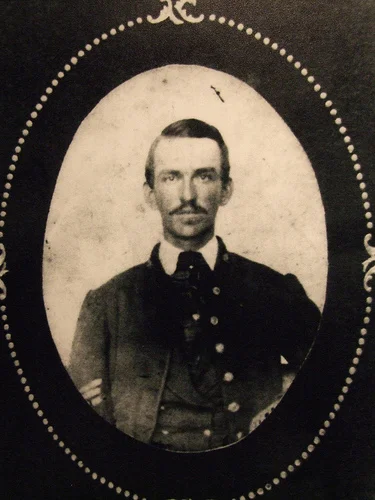
Sgt. Richard Kirkland 

Sgt. Richard Kirkland 

Kirkland filled all the canteens he could carry and crawled out among his enemies to give them water. As both sides watched, he repeatedly went back, refilling the canteens and returning to wounded men who would come to call him the “Angel of Marye’s Heights.” On that December morning long ago, there were no doubt hundreds of men on both sides whose hearts broke to hear the cries of their friends and their enemies. I expect that prayers were prayed and noble thoughts thought, but as missionary David Livingstone once remarked, “Sympathy is no substitute for action.” Compassion is more than heart. It’s also hands and feet—and maybe life, too.

Sergeant Kirkland went on to fight at Chancellorsville and Gettysburg, but just ten months after his mission of mercy, he was killed while leading a charge at Chickamauga. He was 20 years old. On his tombstone is inscribed, “If thine enemy thirsts, give him drink.” These words were spoken by Christ, the Good Samaritan for the world, the One who went to His adversaries, wounded and helpless, and showed matchless mercy. As our Cross-bearer, Jesus even took the place of His dying enemies—so that we could live. This is the cost of grace, the radical rescue work of the Gospel.

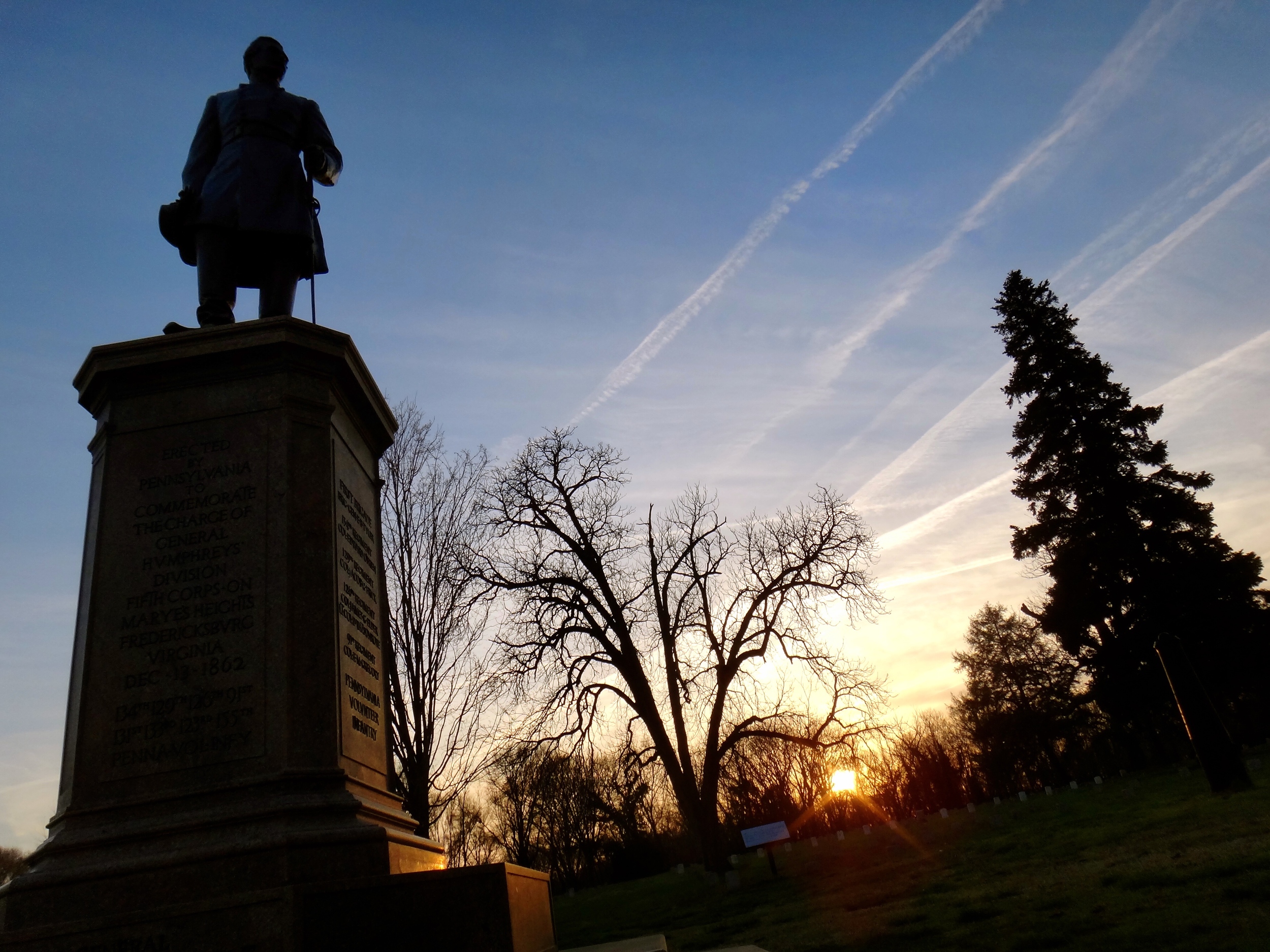
The sun is drawing down, and there is little light left to write by. At the top of Marye’s Heights, a bronze general on a pedestal catches the last glint of day. His troops gather around him in perfect formation—row upon row of marble headstones mark the ranks of the unknown dead. The trees are filled with shadows and song, the requiem of the thrush and the mourning dove.

Tim Keesee

O Sacred Head, Now Wounded

O sacred Head, now wounded,

With grief and shame weighed down,

Now scornfully surrounded

With thorns, Thine only crown

How pale thou art with anguish,

with sore abuse and scorn!

How doth Thy visage languish

Which once was bright as morn!


What Thou, my Lord, hast suffered,

T'was all for sinners' gain;

Mine, mine was the transgression,

But Thine the deadly pain.

Lo, here I fall, my Savior!

'Tis I deserve Thy place;

Look on me with Thy favor,

Vouchsafe to me Thy grace.


What language shall I borrow

To thank Thee, dearest friend,

For this Thy dying sorrow,

Thy pity without end?

O make me Thine forever,

And should I fainting be,

Lord, let me never, never

Outlive my love for Thee.

IMG_5405.GIF


Text attributed to Bernard of Clairvaux (1090-1153)